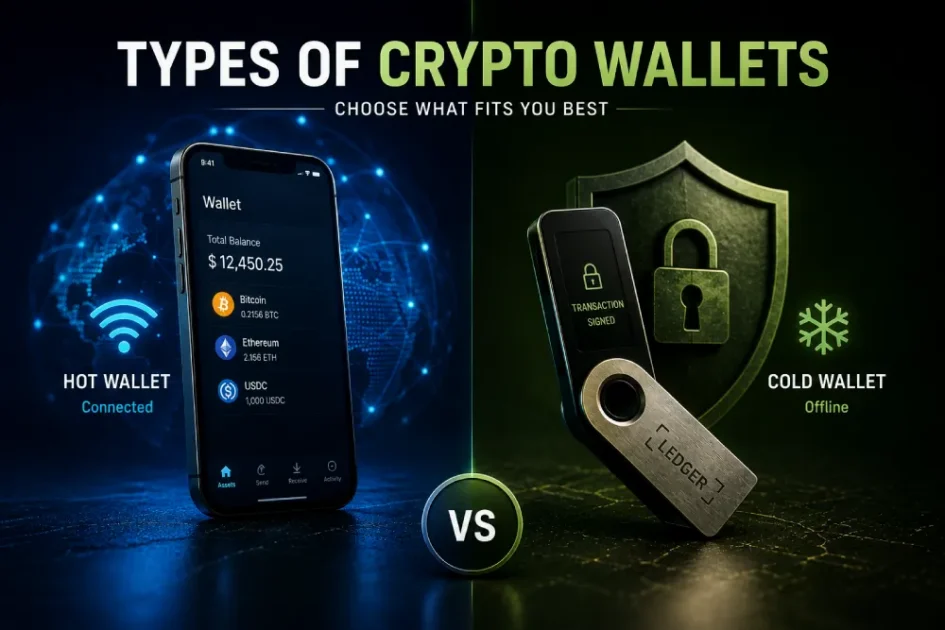
What are the different types of crypto wallets? (Hot and Cold Wallets)
A crypto wallet is a basic tool for storing and managing digital assets. But wallets are not all built in the same way. Some are connected to the internet and make frequent transactions easier, while others focus more on keeping assets offline. Moreover, wallets can differ depending on whether they are operated by a third party or by the user only. This is why it is easier to understand the main features of different types of crypto wallets.
What Is a Crypto Wallet?
What is a crypto wallet in simple terms? A crypto wallet is a software application that enables users to access and manage their cryptocurrency. A crypto wallet usually does not hold cryptocurrency; rather, it holds the private keys required to access cryptocurrencies on the blockchain. The user controls the private keys in some wallets, while in others they are controlled by the companies that offer them.
Some examples of crypto wallets include mobile wallets, browser-based wallets, hardware wallets, and services provided by cryptocurrency exchanges. Below, we have mentioned different types of cryptocurrency wallets.
What Are the Different Types of Cryptocurrency Wallets?
One useful way to classify wallets is by asking who owns and controls the private keys. From this perspective, cryptocurrency wallets can be categorized into two major types: custodial and non-custodial wallets.
Custodial Wallets
The private keys are managed and stored by a third party in the case of a custodial wallet. This type of wallet is popular among cryptocurrency exchanges. When you store cryptocurrency on the platform, you have to rely on the exchange for access to your funds instead of managing the blockchain keys personally.
Such an approach could be helpful, especially for those who do transactions often. The service would handle all issues, including key management, user interface, account recovery, and other technical problems.
But at the same time, it is about losing control. If the platform experiences issues with account limitations, security, or availability, there could be trouble accessing funds.
Custodial wallets can make sense for active trading or when convenience is more important than direct control over private keys. However, keeping large amounts of cryptocurrency on a third-party platform introduces an additional layer of risk.
Non-Custodial Wallets
In a non-custodial wallet, the private key is controlled by the wallet owner. The wallet service generates software or hardware wallets, but the user is responsible for protecting the credentials that grant access to the assets.
Software wallets installed on a phone or computer can be non-custodial. Hardware wallets are another common example.
The major benefit is ownership of keys. There is no need to obtain permission from any exchange or wallet provider to perform a transaction or access the account. However, such control entails certain risks, including the possibility of losing access due to lost recovery phrases or exposure of private keys.
That is why it is important to handle the recovery information carefully when using a non-custodial wallet. A recovery phrase must not be disclosed to anybody or used on unknown websites.
It doesn’t matter whether you are working in the field of digital currencies or just learning the basics; you can make trading easier for yourself right now by using the AI bots for crypto trading we have prepared.
Hot Wallets vs Cold Wallets
Another common way to compare the different kinds of crypto wallets is by their connection to the internet. This creates two main groups: hot wallets and cold wallets.
Hot Wallets
Hot wallets are connected to the internet or designed for regular online use. They are commonly available as mobile applications, desktop programs and browser extensions.
Their main strength is accessibility. A user only has to access the wallet, link it to the decentralized app or send the cryptocurrency without using a physical hardware device.
Hot wallets are good for everyday uses, small amounts and tasks like using decentralized finance apps. However, because hot wallets are always online, they are vulnerable to online attacks like malware and phishing sites. Security therefore depends not only on the wallet itself but also on the device and the user’s habits.
Common features of hot wallets include:
- Quick access to funds
- Support for frequent transactions
- Mobile, desktop or browser-based access
- Easy connection to blockchain applications
- Greater exposure to online security threats
Cold Wallets
Cold wallets store the private keys in an offline state whenever they are not being used. The hardware wallets serve as the best example of such cold wallets. There are certain other offline ways of storing private keys which can also be considered under cold storage.
As the private keys are stored in an offline state, cold wallets can protect the users from certain attacks that can take place online. Cold wallets are usually used to store larger sums of cryptocurrencies.
The downside is convenience. A hardware device must be available when a transaction needs to be signed, and users have to keep both the device and its recovery information secure. Losing the device does not necessarily mean losing the crypto if the recovery phrase is available, but losing both can create a serious problem.
- Common features of cold wallets include:
- Offline key storage
- Reduced exposure to online attacks
- Physical devices in many cases
- Less convenient for frequent transactions
- Greater emphasis on backup and physical security
Hot vs. Cold Wallets: Which Is Safer?
It depends on the individual user, as there is no single option that suits everyone. Hot wallets are generally more practical for regular transactions, while Cold wallets suit those users who would like to keep their digital money offline.
The quantity of cryptocurrency owned by the user is also a factor. A person who owns little digital money can choose hot wallets, which will be easier to manage. A person with considerable amounts of crypto may want to have cold wallets instead because of the security.
Some users also combine both. They keep a smaller amount in a hot wallet for regular activity and store the rest in a cold wallet.
How Can I Choose a Crypto Wallet?
So far, you have become familiar with the types of crypto wallets; now we will look at how to choose them. The best choice depends on how you plan to use cryptocurrency, not on simply choosing the wallet with the longest feature list. When comparing different types of wallets crypto users have access to, consider the following points.
Security
Look at how private keys are handled, whether the wallet supports features such as PIN protection or two-factor authentication, and how transactions are confirmed. For hardware wallets, consider how the device protects keys during transaction signing.
Control of Private Keys
Decide whether you want a third party to manage your keys. Custodial services can be easier to use, while non-custodial wallets give you direct responsibility for access.
Convenience
Think about how often you send and receive cryptocurrency. A mobile or browser wallet may be practical for frequent transactions. If you rarely move your assets, convenience may be less important than offline storage.
Supported Coins
Not all wallets support all coins. Verify if the wallet is compatible with your existing assets and the blockchain network you want to interact with.
Backup and Recovery
Having a good recovery mechanism is essential, especially for non-custodial wallets. Be sure you know about the recovery process before making transfers. Do not keep the seed phrase anywhere public or accessible.
Reputation and Transparency
Find out more about the wallet provider before deciding to use it. Look into their reputation, security level, the platforms it supports, and any available documentation. Reviewing the development of the open-source wallet can also offer valuable insight.
In conclusion, all types of cryptocurrency wallets have distinct roles. There is no obligation to use only one type of wallet. It may be convenient to use different wallets for everyday transactions and for storing funds.
Conclusion
The difference between crypto wallets is in the management of the private keys and whether the keys stay online or not. Custodial vs. non-custodial wallets offer different control options, and hot vs. cold wallets differ only in terms of online access. With these differences made clear, comparing crypto wallets becomes easier.
Frequently Asked Questions
What are the main types of crypto wallets?
There are two types of wallets: custodial and non-custodial wallets, and hot and cold wallets. These wallets differ in various features relating to their access to cryptocurrencies.
What is the safest type of wallet cryptocurrency users can choose?
Many people consider using cold storage to be one of the best solutions for protecting their assets from any online attacks when those assets are stored for an extended period.
Are hot wallets better than cold wallets?
Neither is necessarily better. A hot wallet is more convenient for daily transactions, whereas a cold wallet is more suited to storing cryptocurrencies offline.
Can I use more than one crypto wallet?
Yes. Many cryptocurrency users own multiple crypto wallets for various uses.
What is the difference between custodial and non-custodial wallets?
A custodial wallet means a third party manages the private keys, whereas the owner manages them in a non-custodial wallet.
