What is a crypto wallet and how does it work? | All you need to know
If you have ever bought Bitcoin or another cryptocurrency, you have possibly heard you need a wallet to keep it: But what is a cryptocurrency wallet? It is a tool that lets you access and manage crypto held on a blockchain. Depending on the type of wallet, it can be an app on your phone, a browser extension, a physical device or a service provided by an exchange.
What are cryptocurrency wallets?
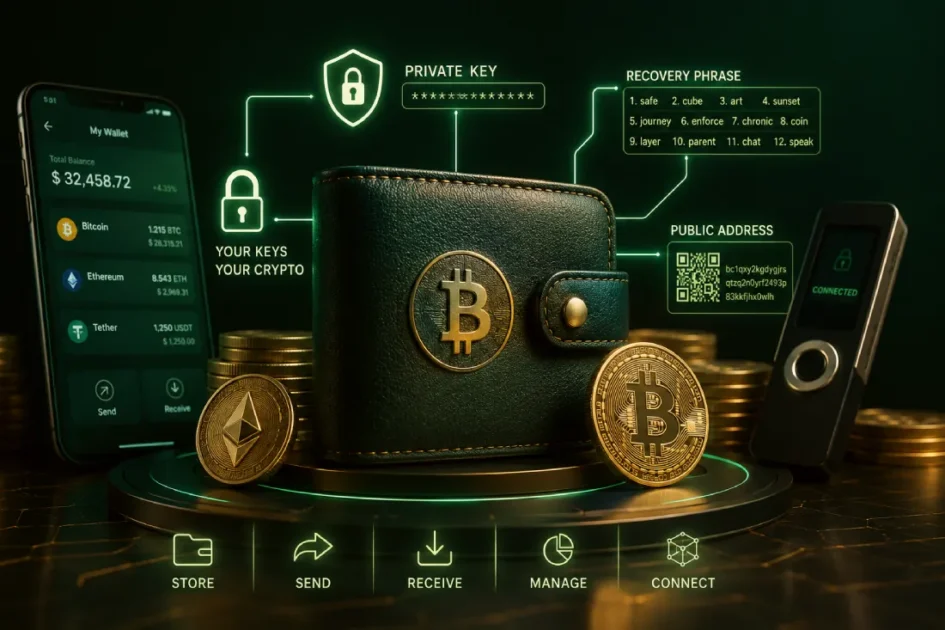
A crypto wallet does not actually contain your coins. Your assets remain on the blockchain. What you keep in the wallet are the keys that allow you to access and move them. For example your Bitcoin is associated with a blockchain address, and your wallet holds the information needed to authorize transactions from that address.
The main details involved are:
| Term | Meaning |
| Public address | The address you give someone when you want to receive crypto |
| Private key | A secret key used to authorize transactions |
| Recovery phrase | A group of words that can be used to restore a wallet |
This is the complete answer to the question “What is a wallet in cryptocurrency?”
Types of cryptocurrency wallets
What are the types of crypto wallets? Wallets come in several forms. The main differences involve where the keys are kept and who controls them:
- A software wallet is an app on your phone or computer. This type is convenient for people who make regular crypto transactions because the wallet is available on a device they already use.
- Hardware wallets work differently. They are small physical devices designed to keep private keys separate from the internet during normal use. Many people consider this type of wallet when they want to keep a larger amount of cryptocurrency outside an exchange.
- With a custodial wallet, the private keys are held by a third party. You can access your account through the platform, but the company remains responsible for managing the keys behind it.
- A non-custodial wallet puts that responsibility in your hands. You hold the private keys and the recovery phrase yourself.
By looking at the answer to the question of “what are cryptocurrency wallets” in practice, the main distinction is between software, hardware, custodial, and non-custodial options.
If you are active in the field of crypto trading and are looking for an intelligent system or automated cryptocurrency trading that will make the process easier for you, you can use our services.
How does a crypto wallet work?
A simple way to understand how crypto wallets work, is by observing the regular process of a transaction. Suppose you want to send Bitcoin to someone. You enter their address, choose the amount and approve the transfer. Your wallet then signs the transaction with your private key before sending it to the Bitcoin network. Nothing is physically moved from one wallet to another. The blockchain records the change in the balance associated with the relevant addresses.
Receiving cryptocurrency is more straightforward. You give another person your public address, they send the funds, and the transaction appears in your wallet after it has been processed by the network.
What does the wallet actually do?
There is quite a bit happening behind the screen when you use a crypto wallet. It keeps track of your addresses and the keys connected to them, prepares transactions and signs them before they are sent to the blockchain. Depending on the wallet, you can also see your balance, check previous transactions, connect to different networks and view the fee for a transfer before approving it.
How to use crypto wallets
Using a crypto wallet becomes easy after learning the basics of its use. You create or import a wallet, secure the recovery phrase, receive funds through your public address and use the wallet interface when you want to send cryptocurrency. When you learn how to use crypto wallets, most of your usual transactions become relatively simple.
What are crypto wallets used for?
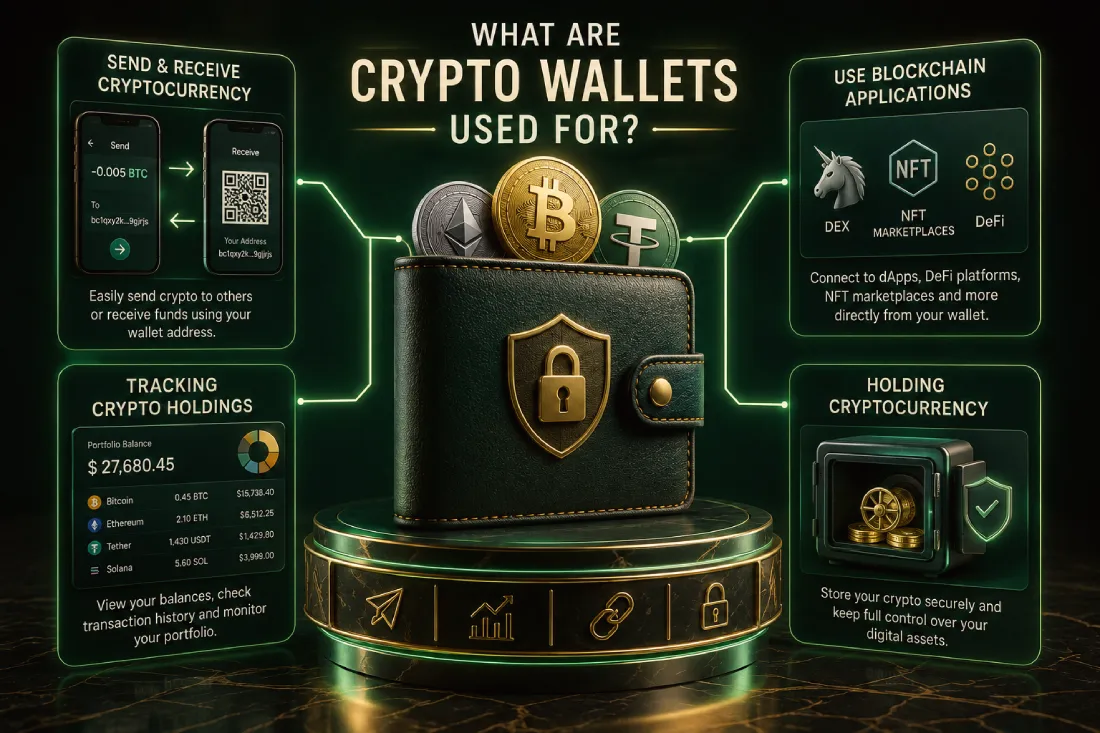
Cryptocurrency wallets are used for more than storing crypto. You can also use them to send and receive funds, manage your assets and connect to blockchain applications.
Send and receive cryptocurrency
Sending and receiving cryptocurrency is the most common use. You can give your wallet address to someone who wants to send you crypto. When sending funds, you enter the recipient’s address and approve the transaction. Wallet addresses can be long strings of letters and numbers, so copying and checking them carefully is important. Some wallets offer QR codes to make this easier.
Tracking crypto holdings
A wallet can show the assets associated with your addresses and their transaction history. Some wallets support only one blockchain, while others can handle several networks and token types.
The balance shown in the app comes from blockchain data. The wallet is simply presenting that information in a form that is easier to read.
Use blockchain applications
Many crypto wallets can connect to decentralized applications, often called dApps. For example, a wallet may be used to access a decentralized exchange or an NFT marketplace. When you connect your wallet to a website, pay attention to what you are being asked to approve. A transaction can have consequences that are not obvious from a simple Confirm button.
Holding cryptocurrency
Some users keep their crypto in a wallet instead of leaving it on an exchange. Whether this is a good choice depends on the user’s circumstances and their ability to protect their wallet credentials.
Why is a crypto wallet important?
A crypto wallet is important because access to cryptocurrency depends on private keys. If you use a non-custodial wallet, there is no bank or customer-service department holding a backup of your keys.
This is where the difference between custodial and non-custodial wallets matters. The main difference is who controls the private keys. With a custodial wallet, the service provider holds them for you, which is common when you keep crypto on an exchange. A non-custodial wallet works differently: you hold the keys yourself and are responsible for the recovery phrase and access to the funds.
How to keep your crypto wallet secure?
The recovery phrase can be described as the most sensitive information in your non-custodial wallet. Keep it somewhere private and never give it to anyone. There is no need to enter it on a website simply because a message asks you.
This advice concerns downloading of wallets too. Use the official source and check the address of any website before connecting your wallet. As well, always make sure about the address of the receiver of the funds before confirming a transaction, because blockchain transactions are usually irrevocable. If you keep a substantial amount of cryptocurrency, a hardware wallet would be a great choice for you. Regardless of the wallet’s type, protect the physical device with a password and always update its software.
Also, if you operate on exchanges like Binance and want to automate your trading process, we have prepared the Binance automated trading bot for you.
Conclusion
Using a crypto wallet provides an opportunity for users to manage their digital assets and approve blockchain transactions. When you understand the difference between a wallet address, a private key and a recovery phrase, the process of sending, receiving and managing crypto becomes much easier to understand.
Frequently Asked Questions
What is a wallet in cryptocurrency?
Wallet is a tool that enables accessing and managing digital assets on a blockchain network.
How does a crypto wallet work when sending cryptocurrency?
When making a transfer of cryptocurrency, the wallet signs the transaction using your private key and sends it to the respective blockchain network for verification and recording.
What is a crypto wallet and how does it work?
A crypto wallet manages the keys that give you access to cryptocurrency recorded on a blockchain. When you make a transaction, the wallet uses the relevant key to authorize it before sending the transaction to the blockchain network.
